| This article was published in Indian Affairs, Volume 183, Fall/Winter 2018 Journal. Minor edits have been made to correct certain terms. We have further updated the article to include additional stories of sacred site protection after 2018! Established in 1922, the Association on American Indian Affairs has a long history defending Native land rights and sacred sites of Native Peoples; in fact, that is how the Association on American Indian Affairs came into being. In the summer of 1922, after Senator Holm O. Bursum of New Mexico introduced a bill that threatened an estimated 60,000 acres of Pueblo lands and water rights, the founders of the Association began the first successful Native rights campaign of the twentieth century: the battle to stop the Bursum Bill. | 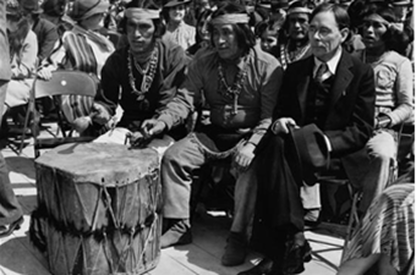 John Collier and All Pueblo Council (Photo by Cathy Porter-Maynard) |
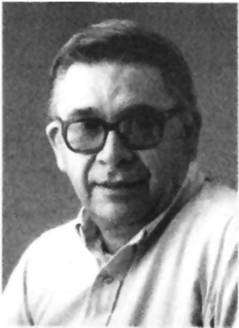 Vine Deloria, Jr. Vine Deloria, Jr. Author: Vine Deloria, Jr.
Originally published by the Association on American Indian Affairs, New York, New York, May 1991 Since time immemorial, Indian tribal Holy Men have gone into the high places, lakes, and isolated sanctuaries to pray, receive guidance from the Spirits, and train younger people in the ceremonies that constitute the spiritual life of the tribal community. In these ceremonies, medicine men represented the whole web of cosmic life in the continuing search for balance and harmony, and through various rituals in which birds, animals, and plants were participants, harmony of life was achieved and maintained. When the tribes were forcibly removed from their aboriginal homelands and forced to live on restricted smaller reservations, many of the ceremonies were prohibited by the Bureau of Indian Affairs and the people were forced to adopt various subterfuges so that ceremonial life could continue. Some tribes conducted their most important ceremonies on national holidays and Christian feast days, explaining to curious whites that they were simply honoring George Washington and celebrating Christmas and Easter. Since many shrines and Holy Places were isolated and rural parts of the continent were not being exploited or settled, it was not difficult for small parties of people to go into the mountains or to remote lakes and buttes and conduct ceremonies without interference from non-Indians. Most Indians did not see any conflict between their old beliefs and the new religions of the white man and consequently a surprising number of people participated in these ancient rituals while maintaining membership in a Christian denomination.
|